


Contigo
3.55.00 Reviews
App Specs
- Version
- 1.2.1.0
- Updated On
- License
- Free
- Downloads
- 100,000+
- Developer
- ContigoTeam
- Categories
- Social
- Platform
- Android
Screenshots


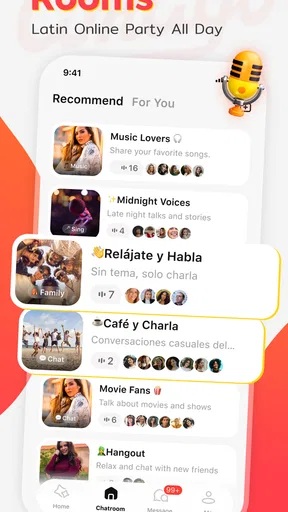


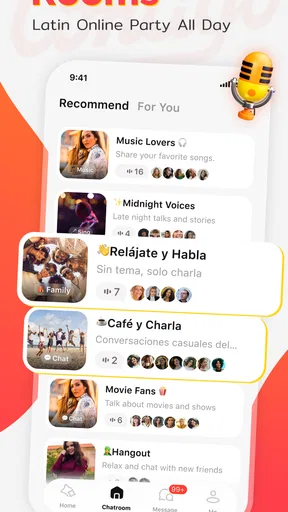

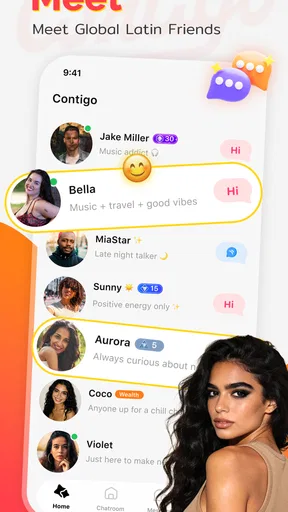
 Analysis by AppCompare
Contigo is a social app from ContigoTeam built around meeting people beyond your usual circle and keeping conversations more personal through voice and chat. I found its appeal easy to understand: instead of treating social interaction as an endless stream of public posts, it puts the emphasis on direct exchanges and shared moments. That makes it more interesting for someone who wants actual conversation rather than another place to scroll.
The app is free to install, carries a Teen content rating, and supports devices running Android 7.0 or later. Its current version is 1.2.1.0, and the project has already reached over one hundred thousand installs. Those figures suggest that Contigo has found an audience, although its average rating of 3.3 from more than one hundred ratings also tells me that the experience is not equally convincing for everyone.
How Contigo feels in everyday use
My first impression is that Contigo works best when I approach it as a conversation tool, not as a replacement for every social network on my phone. The central idea is simple: connect with people from different places, exchange messages, and use voice when typing feels too slow or impersonal. That focus gives the app a clearer personality than platforms that try to combine public feeds, short videos, live broadcasts, shopping, and private messaging in one crowded package.
The most natural use case is a low-pressure conversation with someone who shares an interest but does not live nearby. For example, I could use Contigo after discovering a new language-learning group, a travel community, or a hobby discussion and move from quick written replies to a voice exchange when the conversation becomes more involved. Voice is especially useful when a message needs tone or context that text cannot carry well.
I also see a practical role for it among friends who are spread across countries or time zones. A short voice message can preserve more warmth than a one-line text, while a conversation gives people room to explain what they mean. That makes the app better suited to maintaining a small circle of meaningful contacts than to collecting passive followers.
A social space with a narrower purpose
Contigo’s strongest quality is its narrower purpose. I do not have to interpret it as a news source or a personal broadcasting platform. The experience is easier to understand when I think of it as a place for international conversation, where voice adds a more human layer to ordinary messaging.
That focus also creates a trade-off. A broad social network usually has a large amount of content waiting whenever I open it. Contigo is more dependent on the quality of the people I meet and the willingness of those people to reply. If I prefer instant entertainment, a busy public feed, or algorithmic recommendations, a mainstream social platform may feel more rewarding.
Worth Reading Before You Choose

EA SPORTS FC Mobile 26 Is a Bigger Football Game, but It Takes Time

Flipboard Shows What News Apps Must Do Beyond the Feed

Switching to Android Auto Means Rethinking Your Driving Routine

Google Calendar Makes a Crowded Week Easier to Manage

Ludo King Makes the Most of the Minutes Between Plans

Baby Panda World Brings Quick Play to Modern Phones, but Its Game Library Feels Busy
In my view, the app is most promising for users who are comfortable starting conversations. It is less suitable for someone who expects the application to provide a constant stream of polished content without any effort. The social value comes from participation, and that means the first few sessions may feel quieter than the familiar alternatives.
Voice is useful, but it changes the social commitment
Voice conversation is not simply a decorative addition to chat. It changes how much attention a conversation requires. Text lets me answer while commuting, waiting in line, or handling another small task. Voice asks me to be more present. That can make an exchange feel more genuine, but it can also make the app less convenient for people who want completely asynchronous communication.
I would use voice selectively rather than moving every conversation away from text. A good workflow is to begin with written messages, establish whether the other person is responsive and respectful, and then use voice when the topic benefits from a faster back-and-forth. This approach reduces awkward calls and avoids giving too much time to conversations that are not going anywhere.
Another useful habit is to treat voice as a way to clarify, not as a reason to overshare. When talking with people met online, I would keep early conversations general and avoid revealing personal details too quickly. The app’s social design may encourage openness, but good boundaries still matter more than convenience.
What the current version means for users
The current release, 1.2.1.0, shows that Contigo is still a relatively young product rather than a long-established social destination. I see that as both an opportunity and a warning. A newer app can feel less overloaded and may have room to improve quickly, but it may also have rough edges that mature competitors have already solved through years of use.
For an existing user, the current version is best judged by whether the basic cycle works reliably: finding a suitable person, beginning a conversation, continuing it comfortably, and returning later without losing the sense of connection. Those fundamentals matter more than a long feature list. If they work for the people I want to meet, the app has a reason to stay on my phone.
The release information also gives the app a clear technical advantage for people using older Android hardware. Support beginning with Android 7.0 means Contigo is not restricted to recent phones. That is helpful for users who keep an older device as a backup or cannot upgrade frequently. At the same time, compatibility alone does not guarantee that every older phone will feel equally smooth, so I would keep expectations realistic on aging hardware.
ContigoTeam deserves credit for making the product available to a broad Android audience while keeping the entry price at zero. That makes trying it easy, especially for someone who is curious about voice-based international socializing but does not want to commit financially before understanding the community.
How the app fits beside familiar alternatives
Compared with a conventional messaging app, Contigo is more oriented toward discovering or forming connections outside an established contact list. A messaging service is usually strongest when I already know the person’s phone number, username, or account. Contigo makes more sense when the purpose is meeting people and sharing conversations across geographic boundaries.
Compared with a large social network, it appears less focused on public performance. I would not choose it when my main goal is to publish content for maximum reach, follow celebrities, or browse a highly active feed. I would choose it when a smaller conversation feels more valuable than a larger audience.
Compared with a voice-first community platform, Contigo’s appeal is likely to be its combination of conversation and social discovery rather than a room-based experience. Someone who enjoys scheduled group discussions may prefer a specialized voice community. Someone who wants a more direct exchange may find Contigo easier to approach.
This comparison leads to a simple decision rule. If I want one app for news, entertainment, public posting, and private messages, I would stay with a broad platform. If I want a dedicated place to meet global friends and move naturally between text and voice, Contigo has a more focused reason to exist.
Practical ways to get more from the first sessions
I would not judge the app after sending one message and waiting. Social applications depend heavily on timing and participation, so a better test is to try several conversation styles. I might write a short introduction, respond to an existing topic, and then test a voice exchange with someone who has already shown clear interest. This gives me a better sense of whether the community matches my communication style.
A second useful approach is to keep the first message specific. “Hello” gives the other person very little to answer. Mentioning a language, destination, hobby, or recent experience creates an easier opening and quickly reveals whether there is a real shared interest. This is not a feature of the software, but it makes a noticeable difference in a social app whose value depends on conversation quality.
I would also separate contacts by how much trust they have earned. New connections should stay in the light-conversation stage until replies are consistent and respectful. Voice can help identify whether a person communicates honestly, but it should not be treated as proof of identity or safety. That distinction is important for any app designed to connect strangers.
Finally, I would avoid turning every interaction into a long commitment. A short, friendly exchange is enough to decide whether someone is worth contacting again. This keeps the app from becoming another source of social pressure and makes it easier to maintain a manageable circle.
Where the experience may feel limited
The average rating of 3.3 suggests that the promise does not fully translate into a satisfying experience for every user. I would interpret that cautiously rather than treating it as a verdict, because a social app can feel excellent in one region or interest group and empty in another. Still, it is a useful reminder that the community itself is part of the product, and no interface can guarantee engaging conversations.
The biggest likely friction is the need to invest effort before receiving value. A mature network can immediately show familiar contacts or a busy feed. Contigo asks me to participate, choose who to approach, and tolerate some conversations that end quickly. Users who dislike initiating contact may find the app disappointing even if the underlying idea is appealing.
Voice can create another barrier. Not everyone is comfortable speaking with strangers, and not every situation allows audio. A person who mainly wants quiet, asynchronous messaging may find the voice emphasis unnecessary. In that case, a traditional chat application could be a better fit.
The free entry point is helpful, but in-app purchases range from forty-nine cents to ninety-nine dollars and ninety-nine cents per item. That broad range means I would pay close attention before confirming any purchase and decide whether optional spending genuinely improves my use. The fact that installation costs nothing does not mean every part of the experience should be approached casually from a budget perspective.
I would also skip Contigo if my priority is a tightly controlled professional network, a private family group, or a platform built around large public communities. Its concept is social discovery and personal conversation. Those other needs call for different tools with more specialized structures.
Who should try it, and who should pass
I would recommend Contigo to a curious, socially open user who enjoys learning how people live elsewhere and is willing to start a few conversations. It is particularly suitable for someone who finds text useful but limited, and who wants voice available when an exchange becomes more personal or complicated.
It may also suit people rebuilding their social routine after moving to a new city or joining an international community. The app cannot replace real-world relationships, but it can provide a low-cost way to practice introductions, discover shared interests, and maintain contact with people who live far away.
I would be more hesitant to recommend it to a user seeking instant activity, guaranteed replies, or a highly polished entertainment feed. I would also point younger users and families toward the Teen rating and encourage sensible boundaries around conversations with strangers. The rating does not remove the need for judgment.
People who dislike voice communication should not install it expecting a standard text messenger with no social pressure. Likewise, users who want advanced public publishing tools, professional networking, or a large media library would probably be happier elsewhere. Contigo’s value is concentrated in the human exchange, not in trying to cover every social activity.
What I would watch as the product develops
Because the app is still early in its life, I would watch how well it turns initial curiosity into repeat conversations. The important sign will not simply be more downloads. It will be whether users can find compatible people, return to existing conversations, and feel that voice adds value instead of becoming a feature they ignore.
I would also pay attention to how clearly the app communicates any paid elements. A free social app can build trust when users understand what is optional and why it costs money. Clear choices matter especially in an app where people may already be investing emotional time in new connections.
Another area worth watching is balance. Contigo needs enough discovery to help newcomers meet people, but not so much openness that conversations become noisy or uncomfortable. The best version of this idea would make starting a connection easy while still helping users decide which relationships deserve their attention.
For current users, the sensible approach is to keep expectations measured and use the app for the specific thing it does best: reaching beyond familiar circles and giving conversations a voice-based option. I would not delete every other social tool for it, but I would keep it available if the people I meet there are genuinely interesting.
My final view is positive but selective. Contigo is worth trying when meaningful international conversation matters more to you than endless scrolling. Its free starting point, broad Android compatibility, and clear focus make experimentation easy. The limitations are equally clear: the community determines much of the experience, voice is not convenient for everyone, and optional purchases require attention. I would recommend giving it a fair trial with specific conversation goals, sensible privacy boundaries, and no expectation that every new contact will become a lasting friend.
Pros
- Simple interface makes essential features easy to find.
- Useful for staying connected with friends
- family
- or community groups.
- Notifications help users keep up with new activity.
- Works well for quick updates and everyday communication.
- Available on mobile
- making access convenient while traveling.
Cons
- Some features may require an account or personal information.
- Notification volume can become distracting without careful settings.
- The app’s usefulness depends on having an active user community.
- Performance may vary on older phones or slower connections.
- Privacy options may need review before sharing content or location.
FAQs for Contigo
What is Contigo and what can I use it for?
Contigo is a mobile application designed to help users stay connected and access its main services from an Android or iOS device. Depending on the version and region, it may provide tools such as account management, communication, content, or service-related features. Before downloading, check the official store description to confirm that the available functions match your needs and location.
Is Contigo free to download and use?
Contigo can generally be downloaded without an upfront charge, but some features may require registration, a subscription, in-app purchases, or payment for external services. Your mobile operator may also apply data charges when using the app over cellular networks. It is worth reviewing the pricing information, terms of service, and any recurring billing details before activating optional features.
What permissions does Contigo request?
During setup, Contigo may request permissions such as notifications, internet access, storage, camera, microphone, contacts, or location, depending on the features included in your version. These permissions should support specific functions rather than be accepted automatically. Review each request carefully, allow only what you are comfortable with, and remember that denying optional permissions may limit certain tools without preventing the entire app from opening.
Does Contigo require an account or an internet connection?
Many of Contigo’s functions may require an account, login, or verification process, particularly if the app stores personal information or synchronizes activity across devices. An active internet connection is also likely to be necessary for sign-in, updates, messaging, online content, or cloud-based features. Some sections may work offline, but the available offline functionality can vary by device and app version.
Is Contigo safe for children and how is personal data handled?
Parents should review Contigo’s age rating, privacy policy, and communication features before allowing a child to use it. The app may collect information such as account details, device data, usage activity, or location when relevant to its services. Check the official privacy documentation, configure available privacy settings, and avoid sharing sensitive information through the app unless you understand how it is stored and used.


